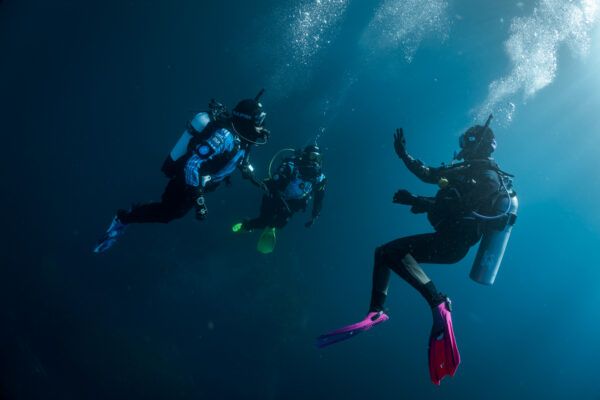
The ocean offers connection, healing and adventure to millions worldwide, yet for many, physical, mental or psychological barriers have made it feel out of reach. PADI has long been committed to breaking down these barriers, creating opportunities for people of all abilities to explore and protect the ocean.
From 17 – 24 May, 2026, PADI will celebrate Adaptive Diving Week for the third year, spotlighting remarkable stories of divers and the contributions of PADI Dive Centers, Resorts and Professionals who empower all divers, foster inclusivity and expand access to the life-changing experience of diving.

The Significance of Adaptive Diving
Globally, one in six people – around 1.3 billion individuals – live with some form of disability. For many, access to activities like scuba and freediving has been limited, despite their proven power for healing, empowerment and growth. “Diving changed my life from ‘no, you can’t’ to ‘yes, you can’ when given the chance,” says Fraser Bathgate, PADI Global Adaptive Consultant. “Once in the water I had freedom I did not have on land, 360-degree dynamic mobility which I did not have in the chair.”
PADI was founded on the belief that the oceans should be accessible to all. For veterans with PTSD, Paralympians, individuals with spinal injuries and countless others, learning to dive has provided a pathway to healing and transformation.
“This inclusive approach is more than a philosophy — it’s deeply ingrained in PADI’s educational programs and global dive community,” says Katie Thompson, PADI Senior Director of Environment and Sustainability. “Over the years, this has allowed individuals of varying abilities to experience the joys and benefits of diving, where the ocean becomes not just a place of recreation, but a space for emotional and physical recovery.”

Building a Legacy of Inclusivity
PADI’s student-centered philosophy means every course is adaptive by nature. “It doesn’t matter if a student has visible or invisible challenges; everyone needs adaptive techniques to some degree,” says Eric Albinsson, PADI Instructor Development and Training Executive.
To strengthen this legacy, PADI introduced two specialty courses.
- Adaptive Techniques Specialty (2017): Expands instructor training to increase awareness of diverse abilities and refine adaptive teaching methods, ensuring scuba and freediving are safe and accessible for all.
- Adaptive Support Diver: Equips divers with the skills to effectively support buddies with physical or mental challenges. Open to certified divers aged 15+ with CPR and first aid training, this course fosters teamwork and confidence underwater.
In 2023, PADI also launched the PADI Adaptive Service Facility accreditation, awarded to PADI Dive Centers and Resorts that demonstrate excellence in providing adaptive services and infrastructure. To qualify, operators must have staff trained in adaptive techniques, offer specialized training for divers with disabilities and provide accessible retail areas, classrooms, pools and boats. Today, more than 60 facilities worldwide serve as beacons of inclusivity, creating truly welcoming environments for divers of all abilities.

Adaptive Diving Week: Year Three
PADI Adaptive Diving Week is a chance to reflect on how diving changes lives and raises industry standards. It celebrates divers who overcome challenges to reach the ocean, and the professionals who make those experiences possible. “Our objective with Adaptive Diving Week is to replicate the success of PADI Women’s Dive Day,” says Thompson. “We saw how PADI’s leadership could break down barriers, and now we aim to build a stronger, more inclusive dive industry by making the aquatic world accessible to everyone”.
As a key initiative under PADI’s People & Humanity Pillar of Change, Adaptive Diving Week highlights PADI’s ongoing work to make diving more inclusive and accessible worldwide.

Get Involved This PADI Adaptive Week!
As the third PADI Adaptive Diving Week approaches, now is the perfect time to explore how you can contribute to this movement. Consider enrolling in the Adaptive Techniques Specialty, encourage your students to become Adaptive Support Divers or work towards the PADI Adaptive Services Facility accreditation for your dive center or resort. Check out the Adaptive Techniques marketing toolkit to help promote how you use Adaptive Techniques in all your courses and services.
This year, from 17 – 24 May, PICs and Application Fees for both the Adaptive Techniques Specialty and Adaptive Support Diver Course will be half price. A credit note will be given after the event. It’s the perfect opportunity to train instructors and divers and expand your facility’s adaptive capabilities.
Ways to get involved:
- Celebrate your stories. Share how you’ve transformed lives through adaptive diving on social media, local press and other channels.
- Be active online. Use #padi and #adaptivetechniques to amplify the movement throughout the week.
- Host an event. Whether it’s an ocean dive, workshop or clinic – or, for operators in colder climates, a pool session – we encourage you to create opportunities for your community to experience adaptive diving firsthand.
- Share your insights. Tell us your best practices, inspiring diver stories and event plans so we can help showcase them in our global communications.
Every step you take helps ensure that the ocean remains a place where everyone, regardless of their abilities, can dive in, explore and protect it for future generations. Together, we can make the ocean a space where everyone belongs.