Carsten Schultz is a PADI IDC Staff Instructor based in Aalborg, Denmark. His dive center Aalborg Dykkerskole and charitable foundation diving360.dk break down barriers to scuba diving. A belief in the “art of possible” has driven Carsten and his team of adaptive instructors, divers and support divers to reach hundreds of individuals with mental and/or physical disabilities, prompting incredible tales of recovery and wellness. Diving360.dk continue to expand the possibilities of healing through diving and are an inspiring example of how our sport has the potential to provide life-changing interventions for those in need.
What first attracted you to teaching Adaptive Techniques?
After becoming a Divemaster in 2004 I got into working with children in care. I saw how diving benefitted them and gave them a belief in themselves and sense of calmness that I recognized from my own diving experiences. I thought, what if the wellbeing effects of diving that I experience are actually much greater for people with, for instance, ADHD? I wanted to explore this more and see if diving could be used as therapy for those who needed it.
As you began to explore the therapeutic effects of diving, what did you learn?
I realized that there is a lot still to learn. I found an article from John Hopkins University by Professors Kaplin and Becker which concludes; “We saw dramatic changes in a matter of days in a number of people with spinal cord injury who went scuba diving. This is just a pilot study, but to see such a restoration of neurological function and significant improvement in PTSD symptoms over such a short period of time was unprecedented.”
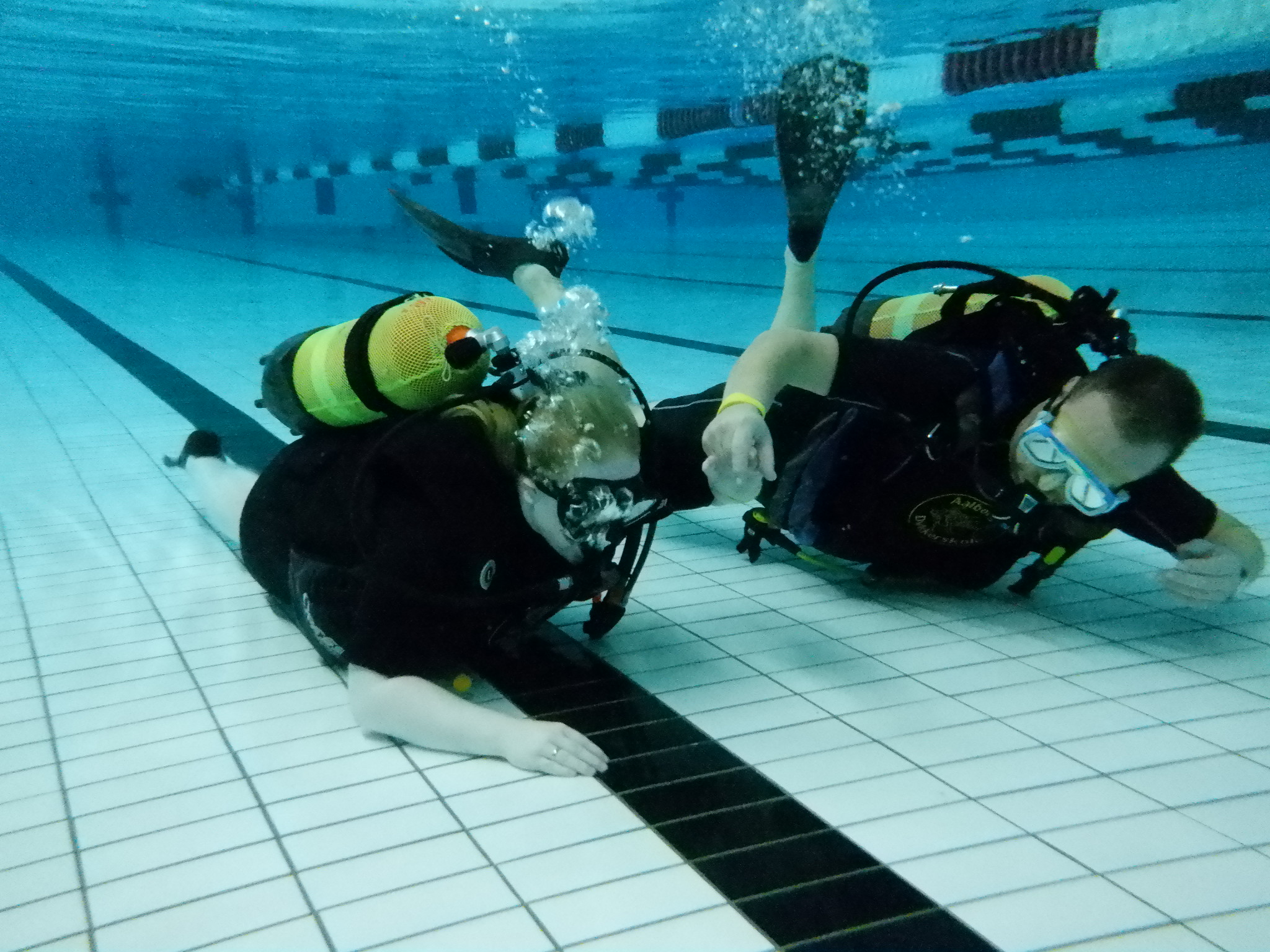
I had just opened Allborg Dykkerskole and was asked to teach a student who was missing his right arm. Supported by PADI Adaptive Techniques guidance, we changed the primary regulator to a left side model and after some extra training he successfully completed the PADI Open Water requirements. A few months later I spoke with him again. He shared that due to a recent operation in his neck he now experienced a constant phantom burning pain. But, when scuba diving the pain just disappeared! I was blown away. His conclusion was that when diving the brain can only think of so much, so it didn’t send out the impulses to trigger the pain.

What lead you and your team to establish Diving360.dk?
We quickly found that by using Adaptive Techniques and the right gear we could benefit a lot of different people with different needs. However, as it mostly requires 1:1 sessions it’s expensive and the people who would really benefit from diving as therapy often don’t have the money for it. By founding diving360.dk we work to raise funds to pay for some or all the costs so that as many as possible can try diving therapy. The foundation also supports research and our next program is aimed at kids with ADHD to gain further insight on how diving can positively affect kids with ADHD.
What research have you already done?
We did a pilot project with an ADHD class of 8 students. Teachers monitored the kids over a period to determine average levels of unrest, concentration, work effort and state of mind. We then offered the kids 2 hours of scuba diving at the local pool over 4 consecutive weeks. Back in the classroom the teachers evaluated the same students and the unanimous results were less unrest, more concentration and an increased sense of self-esteem!
Can you share any stories that stand out to you?
A guy who lost his leg in a motorcycle accident did an Adaptive Technique dive and after resurfacing he burst out “This was the first time since the accident that I have felt truly free again!” Another participant with sclerosis called me the day after a dive and was ecstatic “Something is going on in my feet, it’s like the nerves are trying to connect again” This was after only one dive in a 3 m deep pool.
What are your hopes for the future?
To arrange a pool dive for blind people to swim freely. For that we need full face masks with intercom so the instructor can still be in contact, and of course always within arm’s reach. We hope to unlock more about what diving can do for both mental and physical health and work more closely with universities, hospitals, physiotherapist, and other professionals.
What if in the future your doctor orders you diving lessons instead of a pill?
The marine world can benefit everyone. Read more about PADI’s mission to foster diversity and inclusion in the diving industry and bring the benefits of scuba diving to those who need it most here.