These inspiring women are taking their PADI Pro status and making significant changes in the world of conservation and for the health of our planet both above and below the surface.
Abigail Smith

Abigail Smith, the Program Manager and Intern Counselor for The Whale Shark and Oceanic Research Center (WSORC), could be living a luxurious life in London as a filmmaker, but an online search for a conservation internship changed her plans.
After learning about WSORC, located in Utila, Honduras, the PADI Open Water Diver made a quick decision to travel to Honduras for a month in between her university finals and graduation. And as many PADI Pros can relate, she cancelled her flight home, signed up for the PADI Divemaster course, and decided to pursue a career in marine conservation.
“Though I wasn’t experienced with conservation or scuba diving, I always had a lifelong fascination with the ocean and marine animals, and I had always been happiest when in the water,” says Smith.
Three years later, the PADI IDC Staff Instructor and her team’s primary focus is on coral restoration, whale shark monitoring, lionfish containment and reef health monitoring. They also provide a place for budding researchers, marine biologists, and conservationists to work with whale sharks. The goal of the internship program is to inspire others the way it inspired Smith.
“I have seen what a big impact this internship has on people, especially after our beach cleanups. Witnessing first-hand the amount of plastic and marine debris that directly impacts the ocean can be shocking,” she says. “Unsurprisingly, whenever our interns are lucky enough to encounter whale sharks, this also has a lasting impression on them just as it also had on me three years ago. Many times, when they climb out of the water, they announce that they now want to pursue a career in conservation or apply for school to study marine biology.”
That feeling is something that still hits close to home for Smith. The spontaneous decision to ditch her film career and work with the real superstars of the world couldn’t have been a better fit.
“The scariest choice is to do what you feel is right, not what is expected,” she says. “If you really feel passionate about something the rest will follow, because you will succeed in what you work hardest for and most strongly believe in.”
To celebrate Women’s Dive Day 2019, WSORC is organizing a social media campaign (@wsorc_life & @dive_utila) that will feature interviews to celebrate the female marine scientists, PADI Divers and ocean lovers.
Annie Crawley
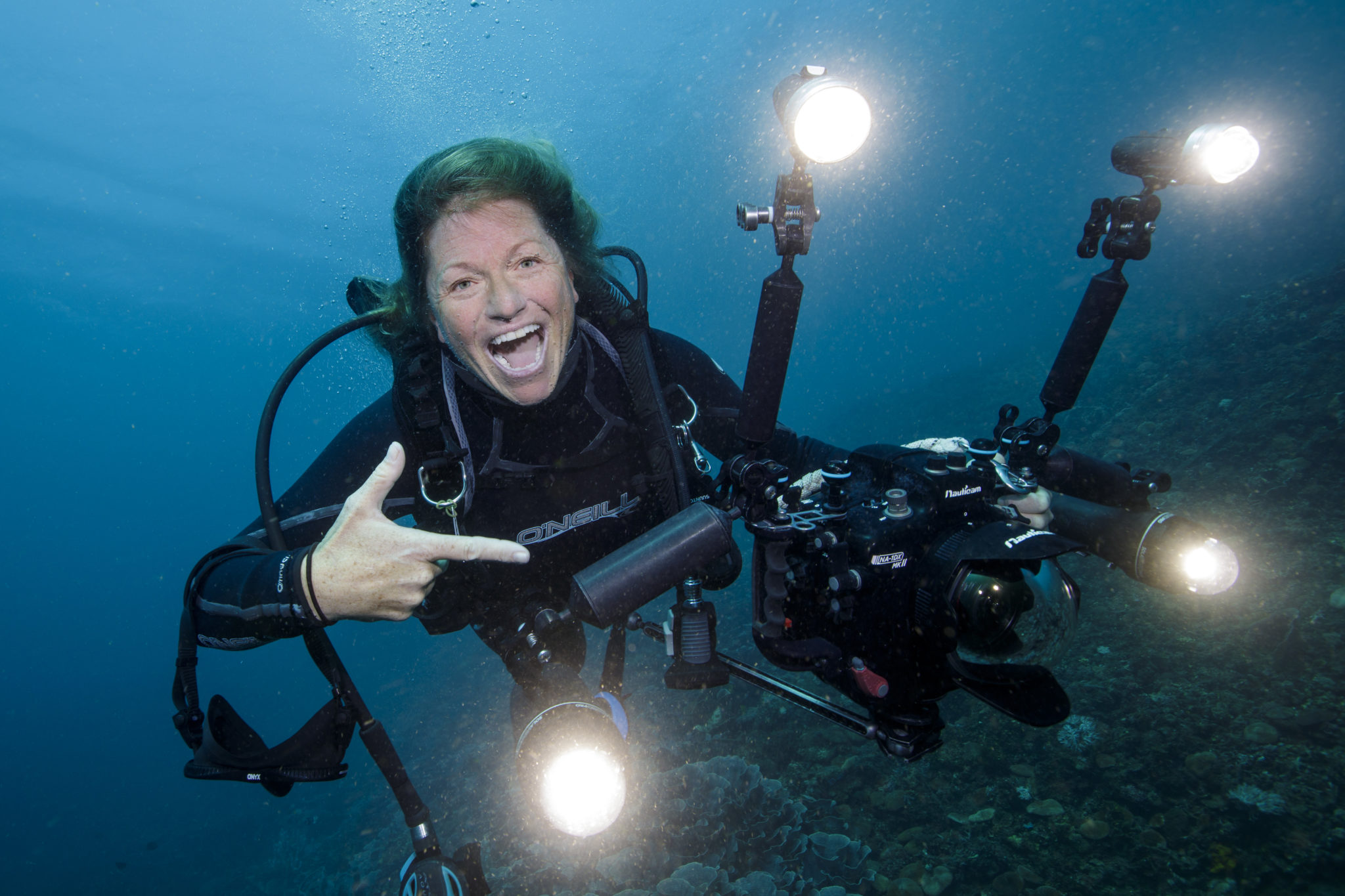
PADI Master Scuba Diver™ Trainer (MSDT) Annie Crawley may be known for her breathtaking underwater photos and film, but the footage in one of her recent videos proves that plastic is still one of the biggest problems in our oceans.
This summer marks Crawley’s 26th anniversary as a PADI Pro. In that time, the underwater photographer and filmmaker has traveled the world, sharing her work about the beauty of the underwater world and the importance of protecting it. She’s never been afraid to take a risk – especially when it comes to destructive practices like cyanide fishing and recovering undetonated bottle bombs. After a visit with the Scripps Institution of Oceanography to the North Pacific Gyre (more commonly known as Garbage Patch), she knew ocean conservation needed to be at the forefront of her work.
Today, Crawley is a public speaker and the founder of Dive Into Your Imagination, a company dedicated to teaching kids about the ocean and conservation. Since its launch in 2006, Crawley has spoken to hundreds of thousands of students and already inspired young divers to follow in her footsteps.
“I wanted to create programs that entertained and educated kids, families, schools, teachers, and more to love the ocean because we protect what we love,” she says. “I realized that so much of what is shared about the sea is fear based. I wanted kids to understand that they could scuba dive at 10 years old … that it wasn’t a scary place … but one where dreams become a reality.”
To address three top issues facing our oceans, sustainability, climate change, and ocean pollution, Crawley started the Our Ocean And You campaign as a way to reach 100 schools in 100 days. Since then, she’s challenged nearly 50,000 students in the greater Seattle area to refuse single-use plastic for 30 days. She also runs scuba diving programs such as Project AWARE marine debris cleanups for kids and teens near her home in the Pacific Northwest.
For Crawley, it’s not just about talking trash. Ocean Annie – as some students affectionately call her – shares the beauty of the underwater world along with the truths about conservation. Thanks to her work, she is helping to create a generation that is learning to love, respect and protect our ocean waters.
Melina Marcou
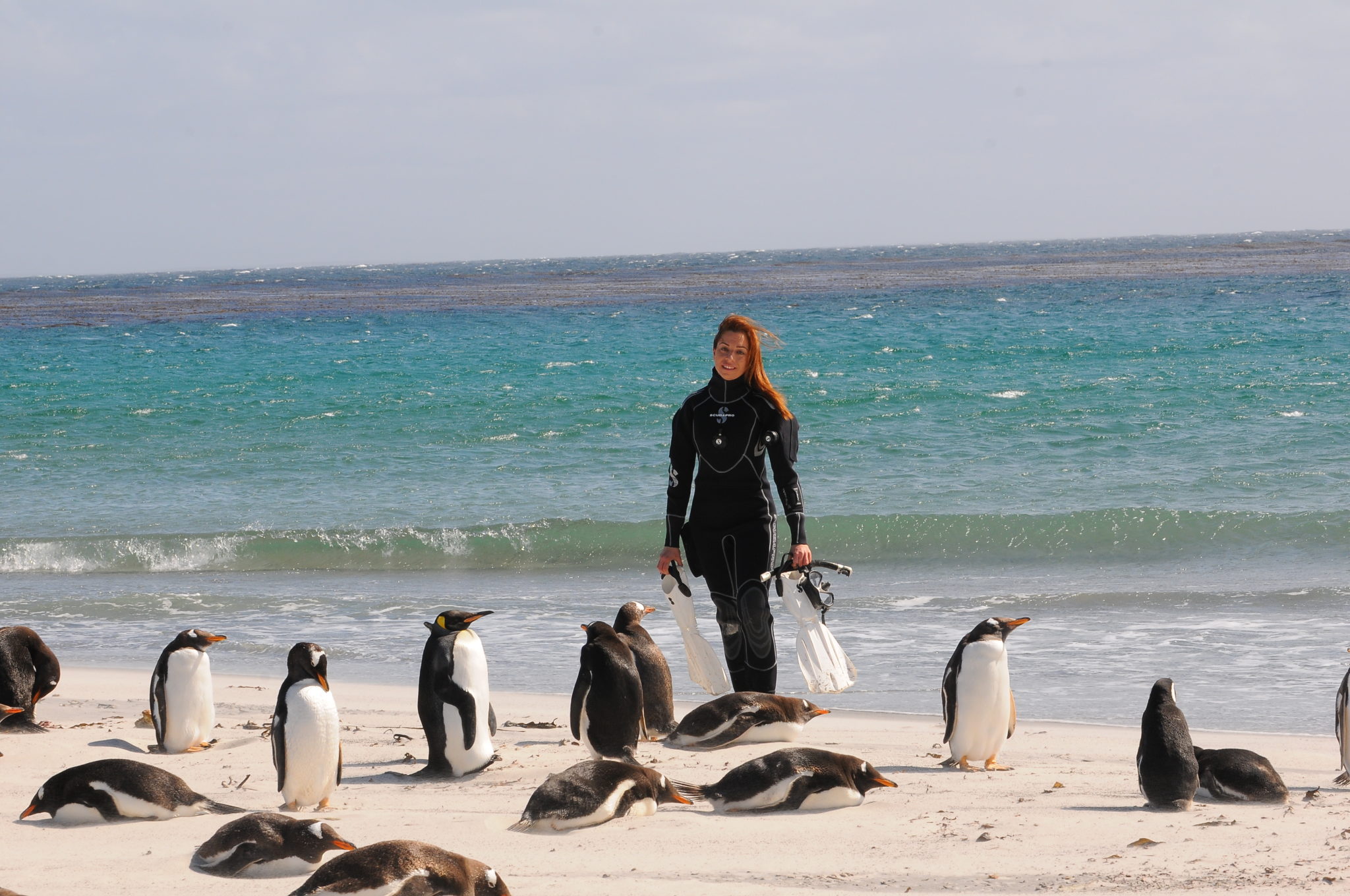
Growing up as a little girl in Cyprus, Melina Marcou enjoyed listening to her father tell stories from his time working on commercial ships. It didn’t take long for her to fall in love with the ocean and follow her own dream of becoming a marine biologist.
Since 2008, she’s made that dream come true. The PADI IDC Staff Instructor is a marine biologist for the Department of Fisheries and Marine Research (DFMR) in Cyprus. Her work focuses on Marine Protected Areas (MPAs) and marine protected species in the Mediterranean Sea.
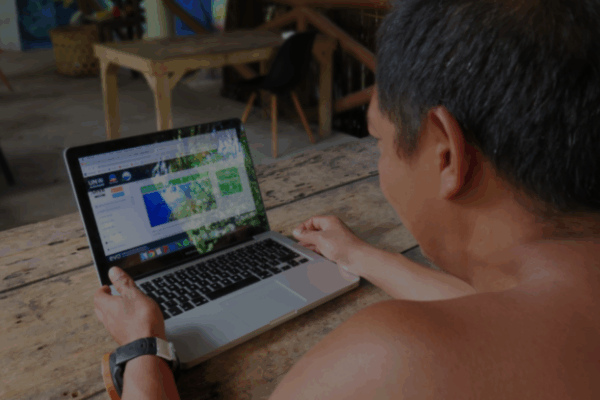
One of the projects she’s passionate about is RECONNECT. The Project “Regional cooperation for the transnational ecosystem sustainable development” promotes the efficient management of natural resources through the regional approach. One of the locations within this project that was declared an MPA is Cavo Greco, located in Cyprus. As a way to include the local diving community, RECONNECT created an app that allows divers to visit designated areas and monitor the marine and coral life by uploading pictures from their dives.
“The involvement of the diving community is crucial in the monitoring of the marine biodiversity of the area,” Marcou says. “The health of the Posidonia Oceanica Meadows will be monitored along with the species present within this priority marine habitat.”
Another EU project that is close to her heart is LIFE EUROTURTLES, a program that protects the area’s sea turtle population using drones to track turtle tracks for their nesting sites. When a nest is confirmed, they protect it with protective cages and an information sign.
“In 2018, more than 300 nests have been protected in various beaches along Cyprus coast using this method and protective cages that were constructed within this Project,” she says.
Marcou has had the opportunity to combine her passions of conservation and diving into various expeditions around the world with Professor Frithjof C. Kuepper of the University of Aberdeen. She’s most thankful for her experiences teaching scuba diving and conducting research on marine algae in areas that include the Dominican Republic, Falkland Islands, Las Cruces (Chile), and Easter Island.
“Teaching the people that work there to be able to scuba dive and be more involved with the conservation efforts done for the marine environment of their country was a feeling I cannot describe,” she says.
One of Marcou’s favorite former students is her husband, Sakis Loannou, who works on the DFMR control enforcement. She was the instructor for his PADI Divemaster course, and they fell in love underwater. Today, he’s a PADI instructor and organizes marine litter cleanups.
“He is now not only teaching people how to dive, but he is organizing cleanup dives, involving both the local fishermen and our diving students and friends,” she says. “I am so proud of him!”
Through all of her conservation efforts and programs, she credits her dive career to helping her turn her dream into a reality.
“Being a PADI Pro has opened up the world to me!” she says. “I have managed to travel around the world, teaching scuba diving not only for recreational purposes but also for people that are involved in the conservation of the marine environment.”
Annelies Posthuma
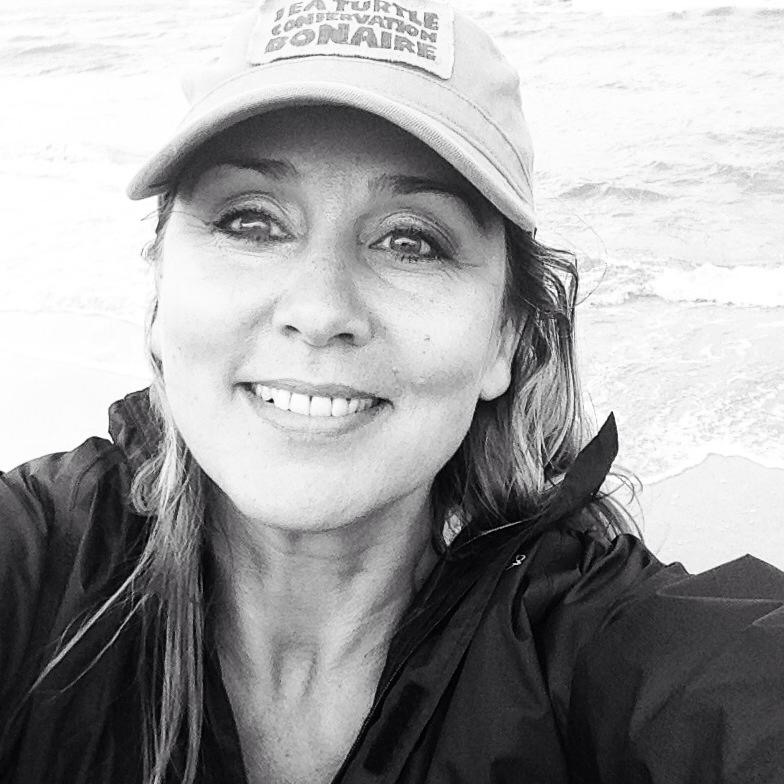
In 2009, PADI Master Scuba Diver Trainer Annelies Posthuma joined a cleanup dive in Bonaire and saved a turtle entangled in fishing lines. Once they freed the turtle, her feelings were bittersweet.
“Saving the turtle was a happy moment, but the ocean floor was covered in debris which was a shocking realization,” she says.
Last year, when Posthuma became a Dive Against Debris® Instructor at Dive Post Valkenburg, she wanted to do something more for the environment. So, she organized a beach cleanup with fellow PADI Instructor Peter Pot and was shocked at their findings.
“I discovered it took little effort to make a big difference! It felt good to contribute, and I noticed how many people wanted to help out,” she says. “And on top of that, we had fun cleaning up the beach together. In just a few hours, we collected so much micro-plastics from what was supposed to be an already clean beach. But if you look closely, the plastics are everywhere.”
Inspired by their efforts, Posthuma recently organized a fundraising underwater challenge with PADI Dive Masters Rick van Groningen en Harry Vrijburg. During the event, buddy teams cleaned up the dive site while answering questions about plastic facts and findings. They donated the funds to The Plastic Soup Foundation – an Amsterdam-based organization dedicated to not just taking plastics out of the water, but ending the amount polluting the ocean daily.
“I strongly believe one single person can make a difference and change the world,” Posthuma says. “Imagine if you are with a small group or even a large group. We can change things for the better if we just put our minds to it. Together we can do so much. Just dive in!”
As a way to unite the dive community and raise funds for The Plastic Soup Foundation, Posthuma used her graphic design skills to create “Duik Nederland Schoon” (Dive Holland Clean) T-Shirts. The Netherland dive community was equally enthusiastic about their efforts. The 100 shirts quickly sold out. The day of the event, they introduced a new hand signal: P for plastic.
“Divers have a lot of underwater signals for squid, sharks, and turtles, but not for the biggest polluter of our oceans: plastic. If we go on polluting in the rate, we do now we will have more plastic than fish in the ocean by 2050,” she says. “With this sign, you signal your buddy that you see plastic and want to take it with you.”
To engage a broader scope of conservation-minded volunteers, they created The Plastic Soup Foundation app to spread the message about the plastic issues, join pledges to reduce plastic footprints, and follow others on their mission against plastic pollution.
Plastic is also the theme for this year’s Women’s Dive Day event. Posthuma, along with her fellow “diving divas” will participate in Dive Against Debris event at Bommenede in Zeeland.
“Reducing Plastic and cleaning up our waters is totally on the agenda. We can’t afford to be indifferent and cynical,” she says. “The future generations count on us to make the world livable again. Be positive, creative, and do whatever small little thing you can do.”
Kerrie Eade
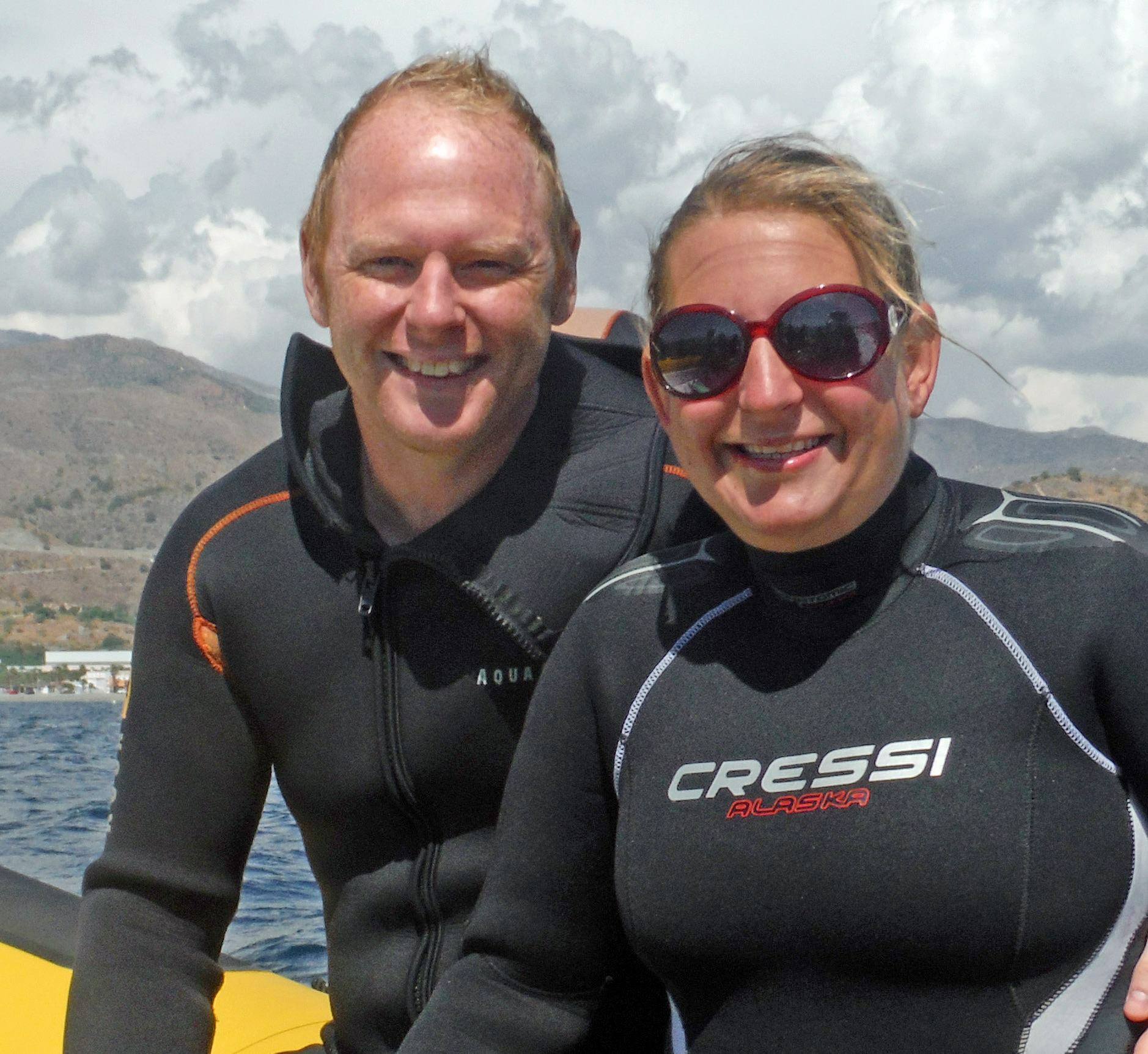
When PADI Course Director Kerrie Eade at Ocean Turtle Diving in Basingstoke, Hampshire, UK teaches an IDC, her candidates get an added specialty – Dive Against Debris.
“I believe in the philosophy of paying it forward,” she says. “I was teaching all my students the Dive Against Debris specialty so that they could make each of their dives count and be more aware of the issues. It made sense then to incorporate that into my IDCs (run through sister company Pro Dive UK) so that every instructor we trained could then also pay it forward to their students and have thousands of more divers picking up and logging debris, and making a real difference.”
After creating a team of conservation-minded PADI Pros, it only made sense for Eade to host other AWARE conservation events in her community. During the UK’s colder winter months, students complete Project AWARE and Coral Reef Conservation specialties in the comfort of a warm classroom.
“We have had seen-years-olds up to 78-year-olds complete this together and learn huge amounts from each other,” she says.
They host regular Dives Against Debris events at their sponsored dive sites Vobster and Swanage Pier and during their dive trips abroad including during a recent trip to Egypt. As a way to inspire the area’s youth, the team regularly speaks about conservation at local schools and their words are making an impact.
“At an infant’s school in Alresford, 70 of the pupils were inspired to write letters to a local supermarket urging them to stop using single-use plastics,” she says.
These conservation lessons are also moving from the classroom to the home. One group of students encouraged parents to set up a local Facebook group to make their town more carbon neutral by setting up car-share initiatives, boycotting produce bags at supermarkets and increasing recycling capabilities.
“Some of the simplest ideas come from children – adults were coming up with lots of complicated solutions of how to get plastic out of the water – an innocent seven-year-old said ‘make less plastic’ – definitely, the best way to tackle the issue in my mind!”
To celebrate Women’s Dive Day 2019, Ocean Turtle Diving and Pro Dive UK will be jointly hosting an event at Vobster. At the event, all women, and men dressed in drag will get free tank rentals in return for a donation to Project AWARE.
Delphine Robbe and Sian Williams
After joining the Gili Eco Trust (GET) in 2004, based off the coast of Lombok, Indonesia, PADI MSDT Delphine Robbe wanted to do more. So, she studied reef gardening and biorock reef restoration technology and kept learning everything she could about ocean conservation.
“I always loved the sea and oceans, probably the influence from the name which was given to me!” she says.
When she was offered a full-time job to manage GET projects, she happily accepted.

In the last 10 years, she’s devoted her work to the marine environment and added topside concerns to the list with a focus on waste management, recycling, and upcycling. At her side is Sian Williams, a PADI Open Water Scuba Instructor with seven AWARE Environmental and Coral Conservation specialties.
“I had long specialized in mangrove restoration and conservation, but when I heard about the coral reef restoration on the Gili Islands I had to come to learn more about it,” says Williams, who looks to Robbe as a teacher and a mentor.
Together, they and their volunteers help with marine restoration, preserving the natural and artificial reefs, Dive Against Debris events, and land-based projects concerning sustainable eco-tourism, reforestation, and teaching environmental education in local schools.
Their efforts are paying off. Kids are using reusable water bottles, sharing facts, and getting their parents to rethink their consumption choices. Since GET initiated the building of recycling facility in 2016, more than 70% of the marine trash they collect can now be recycled. Their recycling centers and eco-waste collections work with more than 550 businesses on Gili Trawangan.
“The reefs are mainly getting better in our area!” says Robbe. “Reefs are not that resilient in a touristic area, so anyone can grow their blue heart by learning how they can help the reefs during scuba diving, as well as on land by raising awareness about how can we help our oceans and our planet. Many solutions are applicable; nothing is impossible if we all do our bit!” says Robbe.