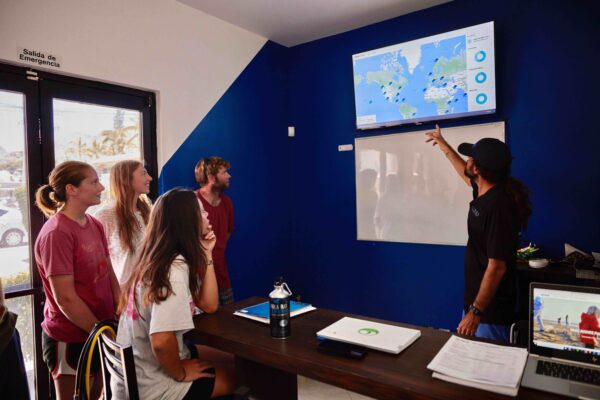
The Great Reef Census is back! And getting involved has never been as easy (or rewarding).
For a second time, we have partnered with Citizens of the Great Barrier Reef on the Great Reef Census, a groundbreaking citizen science project which aims to survey the entirety of the Great Barrier Reef (GBR).
This year, we are hoping to boost citizen science participation to new levels by encouraging thousands of divers and PADI Torchbearers to get involved with the image analysis stage of the census. With this in mind, live leaderboards for the top performing volunteers have been introduced to increase people’s motivation to sign up.
Ultimately, the larger the worldwide workforce making its way through the thousands of reef images, the sooner any resulting research and management advancements can be implemented.
How is the Great Reef Census going so far?
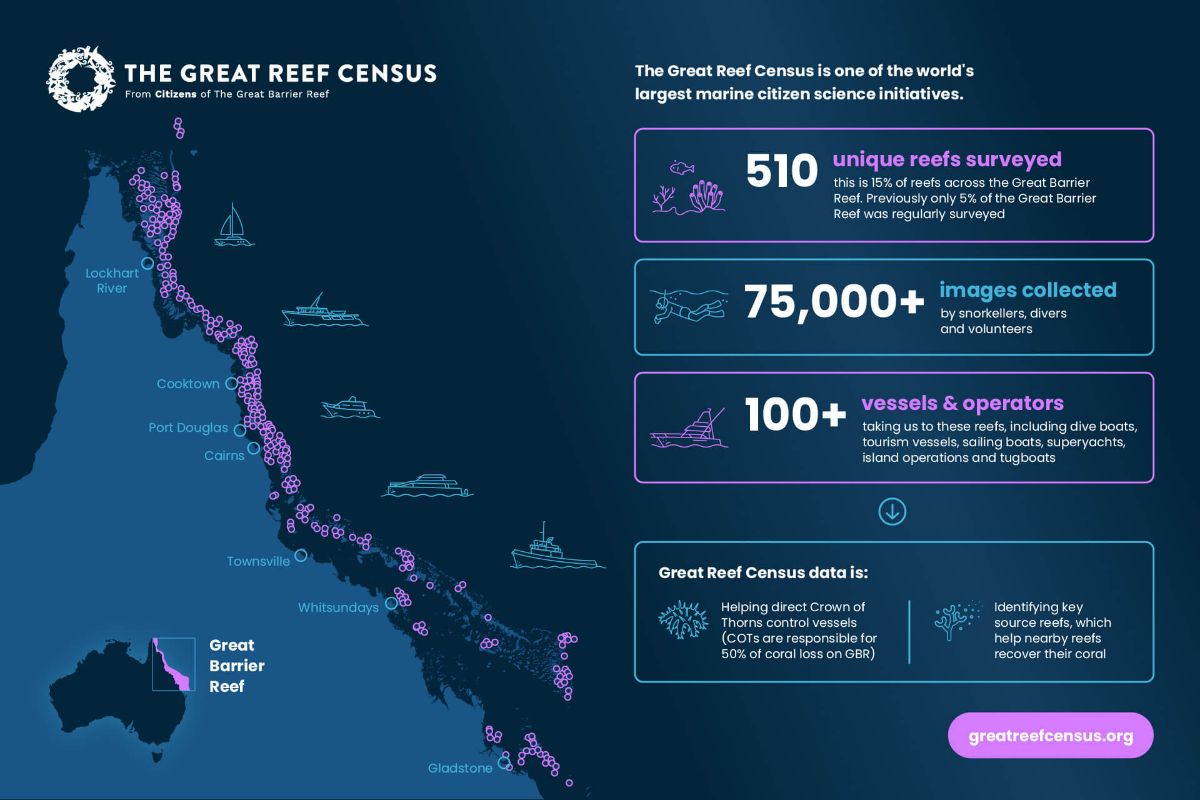
The first stage (in-water data collection) of this year’s two-part Great Reef Census was concluded in early 2023. Here’s an overview:
With all the images collected, it’s now time for the second stage of the census to begin — data analysis. This stage involves analyzing the tens of thousands of images generated during stage one. It’s also where the mass-scale human engagement through a global community has its chance to shine. Thankfully, the next-generation analysis platform makes the task rather quick and simple. Anyone with a few spare minutes and access to an internet-connected smartphone or computer can play a part in this important process.
Check out this video for an explanation of how easy image analysis is in this year’s census:
Once all of the images have been processed, scientists will be able to further interpret the data and begin implementing practices to better protect the GBR. As proof of the process, it’s worth noting that several data-dependent projects are already up and running. These include:
- Directing Crown of Thorn Control Vessels – Crown of thorns, or COTs, are currently responsible for as much as 50% of the coral loss on the reef. Thanks to the work of the Great Reef Census, vessels targeting the removal of COTs have been able to focus on removing this pesky species from the worst affected areas.
- Identifying Key Source Reefs – Source reefs play a key role in helping surrounding reefs recover. By identifying these reefs through the Great Reef Census, they can be given the highest level of protection.
Why You Should Care About the Success of the Census
While the main objective of the Great Reef Census is undoubtedly reef-wide assessment and protection implementation for the Great Barrier Reef, that’s not the only goal. A lot of processes used during the census are intended as pilot schemes, which, once successfully proven to work, can easily be translated to function in other reef systems across the globe.
The success of this project would mean future implementation of a reef census in your area would be a lot easier. Here are some processes the Great Reef Census has managed to optimize:
- Image Analysis – Perhaps the biggest success will be to show how a global community can be used to analyze reef data. What would take a single team years to do can be done in a matter of days thanks to participants worldwide.
- In-Water Surveying – Over the course of each census, the process of capturing large-scale reconnaissance data from the reef has become more refined. This will help everyone to maximize the resources available to them and ensure they are working in the most efficient way possible.
- Protection Implementation – Ultimately, the goal of any census is to implement the right protections for the long-term good of the reef. With actions already being implemented and assessed, the Citizens of the Great Barrier Reef will be able share the most effective ways to secure the future of a reef system.
As you can see, these tools can light the path towards establishing greater legal protections for a coral reef system. That’s why PADI is calling on leaders in the dive community (whether you’re in Cairns, Dahab, Bali or Bonaire) to turn your passion and your community’s enthusiasm into purpose by getting involved in the Great Reef Census analysis stage.